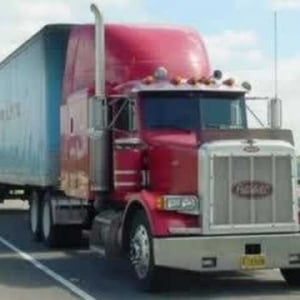
EC's Going For It


I seem to be pretty firmly in the mid to high 6s for fuel mileage again with better climbing power. Maintained 60mph over both hills between Hagerstown and Frederick on I-70 and was loaded both ways. Empty I'd still be down to 50mph and I just figured it was the tall gearing. A couple times I didn't even get a run up. I was just cruising at 62 and it didn't go below 60.

I probably said it already but I'm thinking the truck was gradually derating the horsepower to protect itself as the coolant filter clogged and reduced flow. Because it really woke the hell up and it takes a lot more to get temps up to 200. It stays between 160 and 180 a lot more now.
Cooler engine= cooler intake air temps = denser fuel air charge = more sustainable power for not much more fuel. Personally I wouldn't want to see it below 160. That might swing the scale too far the other way.
 
Cooler engine= cooler intake air temps = denser fuel air charge = more sustainable power for not much more fuel. Personally I wouldn't want to see it below 160. That might swing the scale too far the other way.
Thanks for clearing that up. I remember driving trucks with pyrometers and a switch for the engine fan. I never knew what a pyrometer was for. I just remember my uncle telling me to hit the fan switch on the way down the hill and turn it off at the bottom before ascending the next hill.
 
I think he meant the opposite, RJ. On the decent, the engine isn't working unless you are on the Jakes all the time. The pyrometer would give you the exhaust temperature just prior to the turbo. You tried to keep it between 950*-1100*F, otherwise the excessive temperatures would overheat the drive fan for the turbo and the heat could damage the oil seal in the turbo itself. To cool it a bit, you would drop a gear or split to a lower one just to raise the RPM a bit.

When the coolant temperature reached 200*F, you turned the fan on. If it the pull wasn't that long or hard you could get the coolant temp back to 190*F, which is/was the desired temp for a diesel that wasn't laden with emissions contraptions. Then you flip the fan off and watch your gauges until you hit 200*F again.

The fan also helped to wash the engine bay of hot air helping to regulate the oil temperature too. Today's engines run the coolant at 205-210, with oil temps at 225-240. The oil is also synthetic and doesn't break down near as fast as dino oil did.
 
Got a 34 in over yesterday and part of the day before. Started at 5:07 am today...the earliest possible time. Parked at home just after 3. Got fuel for $2.98/gal. Truck only did 6.1 on the day but I also ran faster in the fast spots and slower in the slow spots. I don't recall ever being in the 6s running over 62 AT ALL before so my aforementioned opinion still stands.

Overall pretty reasonable margins and effort for being a bottom feeder, and not a particularly stressful day. There's still an overall nagging feeling that this truck isn't as smooth as it could be but I think it's narrowed down to the driveshaft or drive tires. I did lock up and slide the drive tires on a few occassions before the ABS was fixed so they could have minor flat spotting that I can't really see or feel. Next easiest/affordable thing to do is pull the shaft and have it balanced even if just to rule it out. If it's the tires, I'm just going to have to deal with it until they're worn or aged out.

There's also the possibility of PSI relative to weight and road conditions. In PA it felt pretty good most of the time, and when I pulled those heavy paper loads it felt good most of the time. But usually we're light so everything can bang around back there and not put enough weight on the tires to plant them into the imperfect pavement.

Really wish I could get a 48,000lb load of flat steel on an air ride flatbed and run it on my usual haunts just to compare. Rule out aero and spring ride trailer and box bouncing on chassis and all that nonsense.
 
Last edited:
For the first time in my life I'm feeling neighborly and a little bit fatherly.

My next door neighbor texted me asking if I have a vise in my garage and I do, so by the time I responded and came out he also came out and we met at my garage. He needs to free up a pair of emergency brake levers so a vise holding them while hammers them free is the ticket.

Anyways, I'm not an advise guy but he did his thing for a bit and we chatted a bit and then when he said he had another one to do I said let me know when you're done so I can lock up, and went back in the house. 😂
 
So anyone who has replaced a water pump on a semi, at approximately what mileage did you do it? Did you wait on the weep hole to tell you or did you do it preventatively?.

I have one laying here but am wondering when I should do it.
 
I'll be 45 miles from the NC state line in my day cab tomorrow. 😳

Taking an empty down and bobtail back. Presumably to help start a trailer pool for a new D&H customer.

I think being empty going down and bobtail back will be the only way I can make the trip. If they're heavy loads I think I'll be too slow in the hills to service the customer. Probably be a sleeper/regional thing. If it pays good and it's volume (it's a global company) it could be worth finally getting the sleeper though.

I'll be compensated decent for what I'm doing. Loaded would pay more. How much more is the question.

I've been wanting to blend my days for a while now but haven't been able to make that financial leap in my brain.

I'm obviously not going to buy new/different equipment for one specific customer but it could be the kick in the pants to say look here's one specific example of where at least some of the extra money will come from.


'course it's also possible we're only running empties down to set up for Norfolk VA. 😏😃
 
Last edited:
Do you really think that running the hills will slow you down that much? I seriously doubt it. Opening that left door all the time is what slows you down. I used to love to watch those 80mph runners blow my doors off, then a few hours later blow my doors off again and then again even further up the road and I'm still chugging along at 70. About the only thing I stopped for was fuel. Even then, it was fuel, food and bathroom and back out there.
 
Do you really think that running the hills will slow you down that much? I seriously doubt it. Opening that left door all the time is what slows you down. I used to love to watch those 80mph runners blow my doors off, then a few hours later blow my doors off again and then again even further up the road and I'm still chugging along at 70. About the only thing I stopped for was fuel. Even then, it was fuel, food and bathroom and back out there.
I'm in a 65mph company truck. I love getting passed by the same truck 4 times in a few hours. I wave as they go by. Again and again. Much like you I try to handle all my business in one stop and keep moving.

Friend of mine is in a 75mph truck his typical day is 500 or less cuz he likes to stop. My average day is 650+ and I don't spend as much money. 😂😂
 
Do you really think that running the hills will slow you down that much? I seriously doubt it. Opening that left door all the time is what slows you down. I used to love to watch those 80mph runners blow my doors off, then a few hours later blow my doors off again and then again even further up the road and I'm still chugging along at 70. About the only thing I stopped for was fuel. Even then, it was fuel, food and bathroom and back out there.
I've gotten pretty decent at local trip planning and knowing what my truck is capable of.

And yes, hills make a difference. A big one.
 
Last edited:
But you aren't pulling them any slower than the guy that just passed you with the 4mpg 600 under the hood. :cool:
It's about what you can do in one day without having your house on your back just in case things go awry.

I'm actually going to have it yanked off me because I got my ass kicked with vibrations just on the 140 mile leg home today. No way do I want to tolerate it for 550+ without reprieve.

I noticed the truck doing a lot of pogoing lately so I think the shocks are done for. I'm going to install my adjustable ones again, to see how much difference it makes.

Other thoughts are driveshaft balance and/or yoke bearings and/or ujoints. Haven't crawled under yet. Still recovering from getting beat to hell.

I ran like I expected to have to run tomorrow (not my usual slow) and it was legit miserable.

Other other thoughts are trade the bitch in on something else.
 
Cooler engine= cooler intake air temps = denser fuel air charge = more sustainable power for not much more fuel. Personally I wouldn't want to see it below 160. That might swing the scale too far the other way.
History lesson:

I have a tractor that was built during WW2.

Back then they didn't have glycol antifreeze yet, so they used alcohol.

They constantly had to keep adjusting the water/alcohol ratio because the alcohol would evaporate.

So on my tractor, they used a 160°F thermostat.

Problem - in hot engines cooling down, condensation gets inside the engine block and it ends up in the oil.

In a modern vehicle, that condensate boils out of the oil and evaporates & gets blown out the crankcase breather.

But in the ancient tractor built in 1945, with that 160°F thermostat, the oil never gets hot enough to boil out the water.

The result is sludge buildup inside the engine.

Since I run regular modern antifreeze in the tractor, I put in a 180°F thermostat, which is the hottest one I can find for it. I'd prefer 190°F because that's the temperature that modern oil is made for.

It's a flathead 4 cylinder, 122 cubic inches, 26 hp (originally) gas engine but I run 15w-40 diesel truck oil in it.

No more sludge in the engine, but the transmission/differential/rear PTO oil still gets condensation in it. Especially when I'm running it in the winter plowing snow.


I forgot the point I was trying to make. :headscratch2:

Oh yeah, you said you don't want to see truck engine temps under 160°. Just figured you'd like that little bit of tractor history. 😁

Running a truck too cold down a grade ain't gonna cause water in the oil because it'll heat back up. But the oil is designed to work best around 190-200°F

I don't know what kind of oil they might've used in 1945. Did they even have oil refineries back then? 😂
No they put the dinosaur directly into the crankcase.
 
WWII oils were a non-detergent straight weight of 30, 40,& 50, depending on the application. Fort the flatties, we'd pull the oil pans and scrape that layer of sludge out of the bottom, wash them out and reinstall. Most all the flatties ran 160* t-stats because circulation was so poor in the radiators. Calcification would build up and plug the capillary tubes.

We would also add diesel fuel or kerosene to an engine to 'flush' it before an oil change. It would help break up some of the sludge that would build up on the rough castings.
 

Back
Top