
Electric Chicken
Well-Known Member
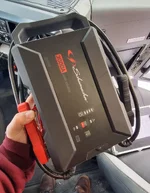
There wasn't enough for the dome light to be on. It's what I'd consider handheld. It's not like a tiny little thing but it doesn't weigh much.


It's easiest to explain these terms by comparing it to something we can actually see and visualize.So apparently it's watts divided by volts equals amps.
So
7300w÷12v=608amps for the semi
and
2500w÷12v=208amps for the pickup.

Nope. I totally suck at algebra, and it's a prerequisite for any type of engineering program.I sure hope that you are making a damned good living with all of this varied knowledge

I was actually decent at algebra but once it got into calculus and trig I started to get lost. Especially trig.Nope. I totally suck at algebra, and it's a prerequisite for any type of engineering program.
The "dirty" jobs are where the money is these days. Plumbers and HVAC. Even an independent mechanic.I know that someone has to make the dreams a reality on paper, but I'm wagering that in the very near future, any person that masters a trade will be in very high demand. They could have failed elementary school and still make $200k/yr. AI isn't going to fix your car, open a clogged drain, wire in an extra room on the house, etc...
That's what I've been doing.I know that someone has to make the dreams a reality on paper,...

We've been so cold that what remains is solid. It sucks. I still haven't tried to get the semi truck out and into the road.We got about two ft of snow here Sunday. I am not shoveling it if I don't have to. I drove right over the small windrow the plow left because it was powder snow.
I refuse to shovel snow if I don't have to, Part of apartment living is not cutting grass or shoveling snow.
I'm afraid of slipping sideways on my slab and dropping off the side, which is about a foot or so straight diwn. It would not be pretty.I saw truck drivers trying to get a frozen brake to release in the yard by backing up the trailer.
That does work but, it works better on bare pavement as opposed to a slippery snow-covered part of the yard.

We all know what a semi engine sounds like when it first starts up after some difficulty in cold weather.

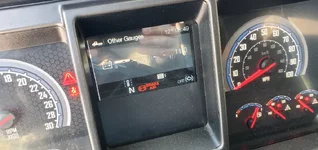
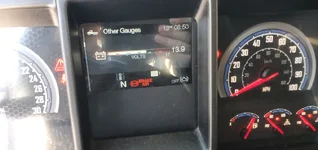
If a lead acid battery discharges below "it won't even crank" voltage too many times, it damages the cells.My Mack batteries are probably EOL. I had to boost it again today.
Might be hard to read but this time it had 11V according to the dash.
View attachment 91471
And as soon as I put the booster on 13.9V. and once again it fired right on up.
View attachment 91472
I thought I made a video of the cold start but I didn't. Apparently I didn't press the record button when I thought I did.
F that I'll just spend the money for new ones.If a lead acid battery discharges below "it won't even crank" voltage too many times, it damages the cells.
It's microscopic chemistry class nerd stuff called sulfation.
Methinks if you want to save those mack batteries you're gonna have to remove them from the truck and bring them inside where they won't freeze, and charge them individually with one of those chargers that have the desulfation mode.
Somehow they can eat away the sulfation using high frequency pulsing currents or something, I dunno the details but all you need to know is what it says in the manual for the charger.
Anyway after they're charged fully, individually, disconnect the charger and wait a day or two & check their voltages. It could just be one battery that took a shit & is pulling down the others.


