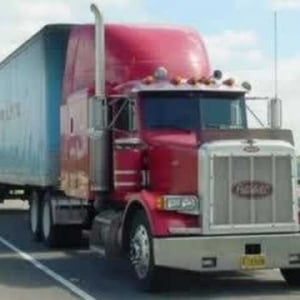
Extending Oil Drain Intervals: What is your experience?


It boils down to a risk/reward situation, and Mike is doing his due diligence in assessment.

The potential early loss of an engine, tow bill, hotel rooms, unscheduled downtime, having to repower a load to deliver, etc. is not palatable to me though.
There’s bigger fish for me to fry than saving $560 a year in oil changes. I only have 3 per year as it is. I’ll focus on the other things that impact me greater. Like fuel mileage and downtime.
 
It boils down to a risk/reward situation, and Mike is doing his due diligence in assessment.

The potential early loss of an engine, tow bill, hotel rooms, unscheduled downtime, having to repower a load to deliver, etc. is not palatable to me though.
Yep he can do whatever he wants. It's his money.
 
It boils down to a risk/reward situation, and Mike is doing his due diligence in assessment.

The potential early loss of an engine, tow bill, hotel rooms, unscheduled downtime, having to repower a load to deliver, etc. is not palatable to me though.
So exactly how would extended drains lead to an early engine failure as long as you keep up with the oil analysis? Remember, the oil analysis tells you exactly what's in the oil.

Just exactly how is this going to happen?
 
So exactly how would extended drains lead to an early engine failure as long as you keep up with the oil analysis? Remember, the oil analysis tells you exactly what's in the oil.

Just exactly how is this going to happen?
That has already been discussed earlier in the thread.
 
Well, do what works for you. I have a hard time seeing a thousand bucks a year savings on this. The cheapest I can find the filters is 43 bucks and you still have to pay for the sample so another 50 bucks. That’s 93 bucks, and don’t you change the primary oil filters at the same time? Also don’t they recommend doing this every 25,000 miles?

I don’t think you are hurting the truck if you are keeping a close eye on the oil. However I don’t buy into the idea that this is going to save you wads of cash and make you a million bucks in trucking. I also don’t believe half of what Kevin Rutherford says. You guys sound like faithful followers. Ask yourself this. Where did the turbo 3000D go? What happened to micro blue? What happened to waterless coolant? What happened to the signature truck? What happened to the air cell? All these products were endorsed and promoted by KR. All proved to be shit. He’s just a pitchman.
 
I did not read all of these posts yet (and probably won't, to be honest) so if I've repeated anything, well, I repeated it. Kevin Rutherford (talk show guy on Sirius XM) was a HUGE fan of the OPS system, and recommended that everyone get an extended oil drain system installed on their truck. Now, to be fair, I got tired of hearing all the callers calling in and asking the same darnn questions over and over and over (where is my sweet spot for fuel mileage, what kind of oil should I run. Listen to the show for more than 10 minutes you'll have your answer), so I stopped listening. At the time, I had an 03 Century with an ISX, and couldn't save up enough money to get this system installed. Then one bad repair of an oil cooler later, and it no longer mattered. Engine locked up, no more trucking. Several years later, I have a Cascadia with a DD15. Detroit said I could go 50K on intervals. I did that once. Ended up adding 3 gallons in the last half of that 50k (4 total during the interval). Dropped down to 25K, and was only adding 1 gallon. I'll probably do the same thing on this Paccar engine.

The thing is, when you change your filters with the OPS or similar systems, the oil vitamins are allegedly replenished when you fill the oil back up. The 50K thing on my DD15 told me that might not be the case, because I was adding oil, but still burning through it.

The extended drain is a good theory, but for me, it has not worked out with the factory set up let alone an aftermarket system.

That's my long answer that almost no one will read to a short question.
 
Well, do what works for you. I have a hard time seeing a thousand bucks a year savings on this. The cheapest I can find the filters is 43 bucks and you still have to pay for the sample so another 50 bucks. That’s 93 bucks, and don’t you change the primary oil filters at the same time? Also don’t they recommend doing this every 25,000 miles?

I don’t think you are hurting the truck if you are keeping a close eye on the oil. However I don’t buy into the idea that this is going to save you wads of cash and make you a million bucks in trucking. I also don’t believe half of what Kevin Rutherford says. You guys sound like faithful followers. Ask yourself this. Where did the turbo 3000D go? What happened to micro blue? What happened to waterless coolant? What happened to the signature truck? What happened to the air cell? All these products were endorsed and promoted by KR. All proved to be shit. He’s just a pitchman.

I’m not a faithful follower by any means. I catch the show as well as listen and read up on information from others.

Started this to simply discuss extending oil drains and hopefully get others experiences.

So far, we have one who has done it, @ironpony , and he had no negative issues. What he did have, thanks to the oil analysis that was part of his regular routine, was an early diagnosis of a failing injector. Probably caught it early enough that it prevented more damage that would have resulted in much higher costs by far than what he ever spent on oil analysis on his truck.

I actually may go forward with this to see how it does, simply to provide another actual experience to the forum. Because so far, all we have is one actual experience ou my of all this discussion.

I wish I had multiple trucks to test this on because one of the theories I would like to dismiss is the concern about the oil ruining your engine. This could easily be dismissed by taking a sample of oil from engine A at 10k that has no bypass filtration, and a sample from engine B at 25k, 50k, and up. I think what you would see is engine a has oil doing more potential damage at 10k than the engine with bypass filtration at 50k and up.

The sample is telling you if the oil is contaminated. If the viscosity is good, no significant sign of wear metals, no silicon, base is good and additives are still good, how is it remotely causing damage? If anything, it may be extending engine life because it is keeping the oil clean.
 
Does the oil analysis tell you how much life the oil has remaining, or does it just tell you how contaminated it is? My understanding about oil is that it's the additives that get used up, not the oil itself. So if the additives are gone, it doesn't matter whether the motor or filtration isn't putting garbage in it.
In that case couldn't ya just do your top-offs with Lucas Oil Stabilizer and thatd be fresh additives
 
So far, we have one who has done it, @ironpony , and he had no negative issues. What he did have, thanks to the oil analysis that was part of his regular routine, was an early diagnosis of a failing injector
The report I posted means nothing? I stretched my oil change last time out to the manufacturers recommended interval for me of 45k miles. That’s the actual tests I’m showing you. This compared to the series 60, is showing my Volvo D13 is a MUCH cleaner burning engine than the series 60 ever was. @junkyarddogs engine isn’t even in the same league. But we’ve been struggling with finding his cause of high spot since it was a new engine.

the shop that does my oil changes charges me $280 to dump 11 gallons of oil, lube and inspect the truck ( it’s nice having a second set of eyes occasionally look at it), and replace three oil filters, two full and one bypass.

If I do them at 25-30k miles annually. For me only driving 85-90k miles a year, that’s three oil changes a year.

so if I stretch it to the 45k, I save the cost of one oil change annually. That’s $280 a year savings. $1400 over 5 years. double those numbers if I only do a single oil change in a year.

My engine warranty specifically calls out oil changes need to be done at 25.000 miles to have the engine covered. So that savings of not doing an oil change actually has now become a greater risk than savings. Especially when they are looking to pocket an Inframe or worse for a $30,000 engine.

I buy six packs of kits from caterpillar for their S.O.S. fluid sample program. Breaks down to like $16 each. (Checkbook shows I paid $96 last time for six) That includes the bottle, mailer and test cost. So not sure where people are finding $50 sample programs at. I can mail a sample from anywhere in the country and I’ll get an email within the week for the results with my sample tested on the same equipment every time and compiled with the historical data of my compartment tested.

july 2017, that testing was what caught my coolant leak and led me to inframe my century.

oil is $10/ gal. So $110.
Filters are $30-35 each. Another $105
Shop supplies and environmental fees are $20

so that means I’m paying maybe $35 labor to get an oil change done for about the same price if I did it myself,

or I can let someone else deal with the disposal issue and get dirty themselves and go spend time fishin, shootin’, or chasing the wife around the kitchen table.

getting greasy and oily in gravel isn’t my idea of fun in extreme heat or dead cold. I’ll go chase momma round the table.
 
Last edited:
The report I posted means nothing? I stretched my oil change last time out to the manufacturers recommended interval for me of 45k miles. That’s the actual tests I’m showing you. This compared to the series 60, is showing my Volvo D13 is a MUCH cleaner burning engine than the series 60 ever was. @junkyarddogs engine isn’t even in the same league. But we’ve been struggling with finding his cause of high spot since it was a new engine.

the shop that does my oil changes charges me $280 to dump 11 gallons of oil, lube and inspect the truck ( it’s nice having a second set of eyes occasionally look at it), and replace three oil filters, two full and one bypass.

If I do them at 25-30k miles annually. For me only driving 85-90k miles a year, that’s three oil changes a year.

so if I stretch it to the 45k, I save the cost of one oil change annually. That’s $280 a year savings. $1400 over 5 years. double those numbers if I only do a single oil change in a year.

My engine warranty specifically calls out oil changes need to be done at 25.000 miles to have the engine covered. So that savings of not doing an oil change actually has now become a greater risk than savings. Especially when they are looking to pocket an Inframe or worse for a $30,000 engine.

I buy six packs of kits from caterpillar for their S.O.S. fluid sample program. Breaks down to like $12 each. That includes the bottle, mailer and test cost. So not sure where people are finding $50 sample programs at. I can mail a sample from anywhere in the country and I’ll get an email within the week for the results with my sample tested on the same equipment every time and compiled with the historical data of my compartment tested.

july 2017, that testing was what caught my coolant leak and led me to inframe my century.

oil is $10/ gal. So $110.
Filters are $30-35 each. Another $105
Shop supplies and environmental fees are $20

so that means I’m paying maybe $35 labor to get an oil change done for about the same price if I did it myself,

or I can let someone else deal with the disposal issue and get dirty themselves and go spend time fishin, shootin’, or chasing the wife around the kitchen table.

getting greasy and oily in gravel isn’t my idea of fun in extreme heat or dead cold. I’ll go chase momma round the table.
I feel same way about oil changes on my 4 wheelers..

Oil and Filter be $30 bucks at Walmart and still on hook for disposal..

What about TIRE ROTATION...ever get the spare out and rotate your own tires welp I ain't 25 anymore or even 30 for that matter

Dealership also washes and throws in a Tire Rotation for $55 bucks on cuopon special..

Don't let em vaccum though they do a crap job and scuffed my door panel
 
Last edited by a moderator:
Pickup is the same way, dealer charges me $79 for a 6.7 Cummins. Includes a wash and vacuum as well with that price. There’s also a lifetime extended warranty on the power train and emissions. So why put their dime to fix it at risk.
 
I did not read all of these posts yet (and probably won't, to be honest) so if I've repeated anything, well, I repeated it. Kevin Rutherford (talk show guy on Sirius XM) was a HUGE fan of the OPS system, and recommended that everyone get an extended oil drain system installed on their truck. Now, to be fair, I got tired of hearing all the callers calling in and asking the same darnn questions over and over and over (where is my sweet spot for fuel mileage, what kind of oil should I run. Listen to the show for more than 10 minutes you'll have your answer), so I stopped listening. At the time, I had an 03 Century with an ISX, and couldn't save up enough money to get this system installed. Then one bad repair of an oil cooler later, and it no longer mattered. Engine locked up, no more trucking. Several years later, I have a Cascadia with a DD15. Detroit said I could go 50K on intervals. I did that once. Ended up adding 3 gallons in the last half of that 50k (4 total during the interval). Dropped down to 25K, and was only adding 1 gallon. I'll probably do the same thing on this Paccar engine.

The thing is, when you change your filters with the OPS or similar systems, the oil vitamins are allegedly replenished when you fill the oil back up. The 50K thing on my DD15 told me that might not be the case, because I was adding oil, but still burning through it.

The extended drain is a good theory, but for me, it has not worked out with the factory set up let alone an aftermarket system.

That's my long answer that almost no one will read to a short question.
Good reply!
 
Pickup is the same way, dealer charges me $79 for a 6.7 Cummins. Includes a wash and vacuum as well with that price. There’s also a lifetime extended warranty on the power train and emissions. So why put their dime to fix it at risk.
When I was younger and much broker I used to buy the dollar something a quart oil and a $3 filter but they were old $3/$4 hundred dollar beaters and lucky they even got that cause I used to just litteraly run em into the ground and buy another
 
I did not read all of these posts yet (and probably won't, to be honest) so if I've repeated anything, well, I repeated it. Kevin Rutherford (talk show guy on Sirius XM) was a HUGE fan of the OPS system, and recommended that everyone get an extended oil drain system installed on their truck. Now, to be fair, I got tired of hearing all the callers calling in and asking the same darnn questions over and over and over (where is my sweet spot for fuel mileage, what kind of oil should I run. Listen to the show for more than 10 minutes you'll have your answer), so I stopped listening. At the time, I had an 03 Century with an ISX, and couldn't save up enough money to get this system installed. Then one bad repair of an oil cooler later, and it no longer mattered. Engine locked up, no more trucking. Several years later, I have a Cascadia with a DD15. Detroit said I could go 50K on intervals. I did that once. Ended up adding 3 gallons in the last half of that 50k (4 total during the interval). Dropped down to 25K, and was only adding 1 gallon. I'll probably do the same thing on this Paccar engine.

The thing is, when you change your filters with the OPS or similar systems, the oil vitamins are allegedly replenished when you fill the oil back up. The 50K thing on my DD15 told me that might not be the case, because I was adding oil, but still burning through it.

The extended drain is a good theory, but for me, it has not worked out with the factory set up let alone an aftermarket system.

That's my long answer that almost no one will read to a short question.
To add to this:

If oil samples are good and lubricating properties don't break down, viscosity is good, etc., what has changed to cause increased consumption?
 
To add to this:

If oil samples are good and lubricating properties don't break down, viscosity is good, etc., what has changed to cause increased consumption?
I never understood that either.

my 14L told me when to change oil.

around 17-18k miles, I’d start loosing a gallon. You could top it off and it would loose it.

I’d get in for an oil change and it would be fine for another 17-18k miles. Sometimes it would be as early as 15-16k, the longest it went was 21k miles.
I never was able to understand or figure out what the reason was.
 

Back
Top