Ontario Outlaw
Hozer Witta Hood
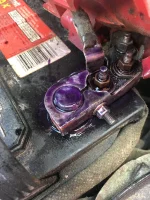
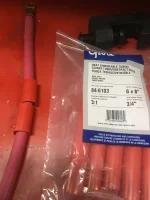
That’s better. Two down, five to go


Welllll... especially since that'd be male on male!



View attachment 51565View attachment 51566
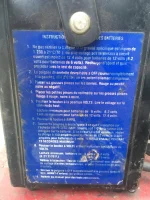
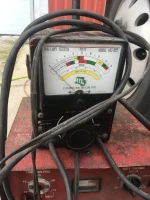
Anybody know how to read the instructions?
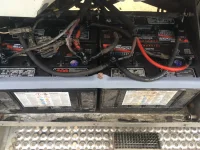
Load tested all four batteries. One was definitely weaker than the other three. I switched it to another spot, I’ll run it next week and test it again
True, time will tellCould have been weaker due to the corrosion and not ever being fully charged, might build up just fine.
Check the specific gravity.View attachment 51565View attachment 51566
Anybody know how to read the instructions?
Load tested all four batteries. One was definitely weaker than the other three. I switched it to another spot, I’ll run it next week and test it again
Close enough!Check the specific gravity.
Charge as needed.
REMOVE CHARGER (no BOOM!)
Select "Volts"
Voltage should be at least 12.4
Select "Amps" for 15 seconds
Voltage should be at least 9.6V
I don't do French, but that's roughly what it says

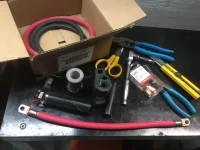

View attachment 51567
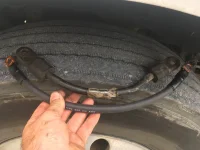
Also, somewhat fuzzily I remember being told not to have your main cables, that go from the battery group to the truck, be hooked to the same battery. So I shifted the one positive cable over one battery spot, too. Now main negative is on one battery, and yet main positive is on a different battery.
It sounds good anyway
I understand that, I thinkElectrically, because they're all tied together in parallel, it makes no difference where on the circuit the truck is connected.

That could be true, but only there are issues with the connecting cables.I understand that, I think
What was explained to me, was that even parallel, the battery at the head of the group still does most of the “lifting”, so to speak.
All the amps would funnel through that one battery before they could be “used”
Maybe it’s bullshit I don’t know
I’m going to find supper I’m tired of thinking about batteries
One guy I worked for was the first guy to mention watching how the batteries were hooked up to the truck. He said he learned the hard way on one of his highway tractorsThat could be true, but only there are issues with the connecting cables.
They're right, they're just dealing with the effects of poor connections. Having the truck connections spread just protects the batteries from the bad interconnects by working them all harder when connections get weaker.One guy I worked for was the first guy to mention watching how the batteries were hooked up to the truck. He said he learned the hard way on one of his highway tractors
Another friend of mine used to run a shop. He said the Ford diesels, as an example, usually the battery closest to the starter was bad. The batteries were hooked up parallel like a big truck. Independent ground cables roughly the same length hooked to the block. Yet the “front” battery was usually cooked
All I can do is listen to older guys with more experience than me and try to draw from their experience. Maybe they’re right, maybe they’re wrong
The Ford factory connections were usually a leaded connection though, so perhaps the connection between the two batteries was weaker and forced the “front” battery to work harder. Maybe in a highway tractor the effects are mitigated with 2/0 cables and multiple connections .
You’ve been at this a lot longer than I have been, so I’ll defer to your wisdom.
rubbery coating
hooked to the same battery
You could get a chrome turbo wing instead

I meant the big one for the top of the truck.