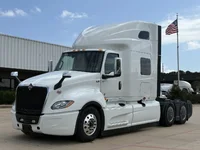
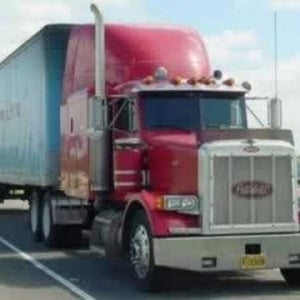
Don't have pen and paper calculations for empty runs, but I do track each time via the computer readout and it is in the 14 range with an empty trailer.
15,000 miles in, and we are staying above 10mpg for all miles. I don't know how far above because I haven't totaled it all up, just mathing it real quick when filling up. This has been mostly trips out west into Arizona (via I40), Utah, across the rockies on 70, Wyoming, etc.. The truck is getting pushed hard in terms of elevation and heavy loads.
This has been at a 62-63mph cruise speed when loaded, faster when empty, and faster a couple times when loaded out of necessity.
At 62mph, on the occasions when it does upshift into 14th (OD), we are cruising at 900rpm. It's usually in direct drive (13th) at this speed.
I was cautiously optimistic about getting numbers like this when looking to purchase one of these, but realistically not expecting it.
I will be bumping up the speed soon and seeing how it responds, but likely only to 65 as I have no desire to drive any faster. I've honestly gotten really comfortable at the 62-63mph range.
On the negative side, I do have a check engine light that has now come on twice. Zero effect on the truck's performance, so I am writing it off as a bug for now as long as it gets taken care of without problems once I get it in to be checked out. It's a stupid code, indicating that the DPF filter is possibly missing. Yes, missing.