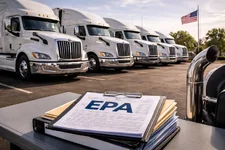
The fight over EPA’s Phase 3 truck emissions rule just got bigger, and this one reaches far beyond Washington policy circles. Truck makers have now stepped in to support EPA’s repeal of the Phase 3 greenhouse-gas standards for heavy-duty vehicles. Those standards were supposed to begin with model year 2027 trucks, and this legal battle could help decide whether fleets still get pushed toward zero-emission equipment on the timeline the old rule pointed toward.
For trucking, this is not just another courtroom argument over agency power. It is a fight over what kinds of trucks manufacturers will be expected to build, what kinds of trucks fleets may be pressured to buy, and whether those expectations line up with real-world freight.
The original Phase 3 rule was sold as technology-neutral and performance-based. On paper, that sounds flexible. In practice, a lot of truckers, fleets, and industry groups saw it differently. Their argument was pretty simple. The tougher the emissions targets get, the harder it becomes to meet them without pushing the market toward electric trucks, whether the infrastructure, range, payload, and price make sense yet or not.
Now the whole issue has shifted again.
EPA has already rescinded the greenhouse-gas endangerment finding that had been used as the legal foundation for these rules, and the agency says that without that finding it no longer has the same authority to regulate greenhouse-gas emissions from new motor vehicles. That move triggered lawsuits from states and cities that want the climate rules preserved. Truck manufacturers, though, are not sitting this one out. They have stepped in on EPA’s side, arguing that Phase 3 was moving faster than the market was realistically prepared to handle.
A lot of people in trucking are going to understand that argument immediately.
The concern has never just been emissions in the abstract. It has been truck cost, range, charging infrastructure, downtime, payload limits, and whether the equipment can do the job without making the business harder to run. Owner-operators and small fleets usually cut right to the heart of it. If the truck still does not fit the job, who is supposed to eat the cost of being pushed into it too early?
That is what gives this story more weight than a lot of regulatory pieces. Even though Phase 3 is technically written as a manufacturer rule, the pressure would never stop with the manufacturers. It would land on the people buying the trucks, financing the trucks, spec’ing the trucks, maintaining the trucks, and trying to make a living with them.
In other words, it lands on trucking.
The manufacturers backing EPA are basically saying the earlier phases worked better because they lined up more closely with real customer demand and real operational savings. Their complaint with Phase 3 is that it goes further and faster than the market can reasonably support. That is a very different argument than saying cleaner technology should never happen. It is an argument about pace, practicality, and whether Washington is trying to force a transition before the business side is truly ready.
A lot of fleets would say that is exactly the problem.
Truckers are not blind to where technology is headed. The industry has been improving fuel efficiency and emissions performance for years. But there is a big difference between progress the market can absorb and mandates that start getting out ahead of what trucking can realistically buy, run, and maintain.
At that point, this stops being just a policy story and turns into a truck-buying story.
If EPA’s rollback holds up, some of the pressure tied to Phase 3 could ease. If the legal challenge to that rollback succeeds, the industry could end up right back in a fight over whether truck buyers are going to be forced toward equipment many believe is still not practical at scale.
For small fleets especially, this is not some far-off debate. It is a real question about what trucks will cost, what options will still be available, and whether government timelines are starting to outrun business reality.
The takeaway is simple. Keep an eye on this case. At its core, it is a fight over how fast the next generation of commercial trucks gets pushed into the market and whether fleets still have room to move at a pace the business can survive.
For trucking, this is not just another courtroom argument over agency power. It is a fight over what kinds of trucks manufacturers will be expected to build, what kinds of trucks fleets may be pressured to buy, and whether those expectations line up with real-world freight.
The original Phase 3 rule was sold as technology-neutral and performance-based. On paper, that sounds flexible. In practice, a lot of truckers, fleets, and industry groups saw it differently. Their argument was pretty simple. The tougher the emissions targets get, the harder it becomes to meet them without pushing the market toward electric trucks, whether the infrastructure, range, payload, and price make sense yet or not.
Now the whole issue has shifted again.
EPA has already rescinded the greenhouse-gas endangerment finding that had been used as the legal foundation for these rules, and the agency says that without that finding it no longer has the same authority to regulate greenhouse-gas emissions from new motor vehicles. That move triggered lawsuits from states and cities that want the climate rules preserved. Truck manufacturers, though, are not sitting this one out. They have stepped in on EPA’s side, arguing that Phase 3 was moving faster than the market was realistically prepared to handle.
A lot of people in trucking are going to understand that argument immediately.
The concern has never just been emissions in the abstract. It has been truck cost, range, charging infrastructure, downtime, payload limits, and whether the equipment can do the job without making the business harder to run. Owner-operators and small fleets usually cut right to the heart of it. If the truck still does not fit the job, who is supposed to eat the cost of being pushed into it too early?
That is what gives this story more weight than a lot of regulatory pieces. Even though Phase 3 is technically written as a manufacturer rule, the pressure would never stop with the manufacturers. It would land on the people buying the trucks, financing the trucks, spec’ing the trucks, maintaining the trucks, and trying to make a living with them.
In other words, it lands on trucking.
The manufacturers backing EPA are basically saying the earlier phases worked better because they lined up more closely with real customer demand and real operational savings. Their complaint with Phase 3 is that it goes further and faster than the market can reasonably support. That is a very different argument than saying cleaner technology should never happen. It is an argument about pace, practicality, and whether Washington is trying to force a transition before the business side is truly ready.
A lot of fleets would say that is exactly the problem.
Truckers are not blind to where technology is headed. The industry has been improving fuel efficiency and emissions performance for years. But there is a big difference between progress the market can absorb and mandates that start getting out ahead of what trucking can realistically buy, run, and maintain.
At that point, this stops being just a policy story and turns into a truck-buying story.
If EPA’s rollback holds up, some of the pressure tied to Phase 3 could ease. If the legal challenge to that rollback succeeds, the industry could end up right back in a fight over whether truck buyers are going to be forced toward equipment many believe is still not practical at scale.
For small fleets especially, this is not some far-off debate. It is a real question about what trucks will cost, what options will still be available, and whether government timelines are starting to outrun business reality.
The takeaway is simple. Keep an eye on this case. At its core, it is a fight over how fast the next generation of commercial trucks gets pushed into the market and whether fleets still have room to move at a pace the business can survive.