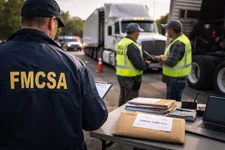
Freight fraud is no longer just another warning topic at trucking conferences. At the Mid-America Trucking Show, FMCSA used one of the industry’s biggest stages to make it clear that fraud, cargo theft, fake identities, and bad actors in trucking are now squarely in the agency’s sights. FMCSA opened MATS with a fraud-focused panel aimed especially at small-business trucking, while agency officials described open investigations tied to chameleon carriers, identity theft, registration issues, fraudulent ELD devices, and entry-level driver training problems.
That matters because small carriers and owner-operators are the ones getting hit from every direction. A majority of owner-operators responding to industry polling reported being victims of some form of fraud. One owner-operator at the show said every load now creates two to five hours of back-end vetting work. That tells you this is no longer just a “be careful out there” problem. It is costing real time, real money, and real peace of mind.
FMCSA’s message at MATS was that the agency is not treating this like one isolated scam at a time. Officials said FMCSA has multiple specialized operations underway covering everything from principal-place-of-business issues to chameleon carriers, cabotage, and CDL issuance. The agency has also highlighted public-facing investigations involving chameleon carriers, in-person audits of CDL schools, and the blocking of hundreds of ELD registrations. FMCSA also recently removed additional ELDs from its registered list and warned that carriers still using those devices after the cutoff date can be treated as operating without a compliant ELD.
That is the new angle trucking should pay attention to. This is not just about fraud getting smarter. It is about FMCSA trying to raise the barrier to entry and squeeze bad actors out before they keep burning legitimate carriers. Agency leadership has targeted “ghost offices,” with investigative teams looking at locations showing hundreds of entities at one principal place of business. FMCSA has committed attorneys and investigators to the problem and has sharply narrowed approvals tied to P.O. Boxes, UPS Stores, and other questionable business locations.
For truckers, the practical advice from the MATS panel may be just as important as the crackdown itself. If the carrier name on the bill of lading does not match who supposedly gave you the freight, do not sign it as-is. That paper trail matters. FMCSA also made the point that if you get hit, do not just get mad and move on. File a local police report and upload it to the National Consumer Complaint Database, because what looks like one isolated incident may help investigators connect a much bigger fraud pattern later.
FMCSA has also made it clear that identity theft is at the center of a lot of these fraud cases. The agency says broker and carrier fraud often happens when someone uses another carrier’s USDOT number without permission or acts as a broker without being properly registered. FMCSA tells victims to file a complaint, make sure the company phone number shown in SAFER is correct, notify insurance, load boards, and factoring companies, and treat company information the same way they would treat banking information.
This is where the story hits hardest for small carriers. The legitimate operator is now doing extra detective work just to move a load that used to look routine. Vet the broker. Vet the carrier. Check the contact number. Check the bill of lading. Watch for spoofed emails. Fraud is no longer just on the load board. It is showing up in registration, communications, dispatching, and compliance.
The industry has spent years talking about freight fraud as a growing problem. What changed at MATS is that FMCSA showed it is now treating the issue like an enforcement and market-integrity problem, not just a cautionary tale. That does not mean fraud disappears tomorrow. But it does mean carriers should start thinking differently about what protects them. The old mindset of “just keep your eyes open” is no longer enough. This is a documentation problem, a vetting problem, a compliance problem, and in many cases an identity-theft problem all at once.
For Freight Relocators readers, the takeaway is simple. If your operation has not tightened its vetting process, double-checked its SAFER information, and started treating every suspicious mismatch like a real threat, now is the time. FMCSA is telling the industry the fraud fight is real, the investigations are active, and the paperwork trail matters. The carriers who adapt will protect themselves better. The ones who keep treating this like background noise may find out the hard way that the freight was never the only thing getting stolen.
That matters because small carriers and owner-operators are the ones getting hit from every direction. A majority of owner-operators responding to industry polling reported being victims of some form of fraud. One owner-operator at the show said every load now creates two to five hours of back-end vetting work. That tells you this is no longer just a “be careful out there” problem. It is costing real time, real money, and real peace of mind.
FMCSA’s message at MATS was that the agency is not treating this like one isolated scam at a time. Officials said FMCSA has multiple specialized operations underway covering everything from principal-place-of-business issues to chameleon carriers, cabotage, and CDL issuance. The agency has also highlighted public-facing investigations involving chameleon carriers, in-person audits of CDL schools, and the blocking of hundreds of ELD registrations. FMCSA also recently removed additional ELDs from its registered list and warned that carriers still using those devices after the cutoff date can be treated as operating without a compliant ELD.
That is the new angle trucking should pay attention to. This is not just about fraud getting smarter. It is about FMCSA trying to raise the barrier to entry and squeeze bad actors out before they keep burning legitimate carriers. Agency leadership has targeted “ghost offices,” with investigative teams looking at locations showing hundreds of entities at one principal place of business. FMCSA has committed attorneys and investigators to the problem and has sharply narrowed approvals tied to P.O. Boxes, UPS Stores, and other questionable business locations.
For truckers, the practical advice from the MATS panel may be just as important as the crackdown itself. If the carrier name on the bill of lading does not match who supposedly gave you the freight, do not sign it as-is. That paper trail matters. FMCSA also made the point that if you get hit, do not just get mad and move on. File a local police report and upload it to the National Consumer Complaint Database, because what looks like one isolated incident may help investigators connect a much bigger fraud pattern later.
FMCSA has also made it clear that identity theft is at the center of a lot of these fraud cases. The agency says broker and carrier fraud often happens when someone uses another carrier’s USDOT number without permission or acts as a broker without being properly registered. FMCSA tells victims to file a complaint, make sure the company phone number shown in SAFER is correct, notify insurance, load boards, and factoring companies, and treat company information the same way they would treat banking information.
This is where the story hits hardest for small carriers. The legitimate operator is now doing extra detective work just to move a load that used to look routine. Vet the broker. Vet the carrier. Check the contact number. Check the bill of lading. Watch for spoofed emails. Fraud is no longer just on the load board. It is showing up in registration, communications, dispatching, and compliance.
The industry has spent years talking about freight fraud as a growing problem. What changed at MATS is that FMCSA showed it is now treating the issue like an enforcement and market-integrity problem, not just a cautionary tale. That does not mean fraud disappears tomorrow. But it does mean carriers should start thinking differently about what protects them. The old mindset of “just keep your eyes open” is no longer enough. This is a documentation problem, a vetting problem, a compliance problem, and in many cases an identity-theft problem all at once.
For Freight Relocators readers, the takeaway is simple. If your operation has not tightened its vetting process, double-checked its SAFER information, and started treating every suspicious mismatch like a real threat, now is the time. FMCSA is telling the industry the fraud fight is real, the investigations are active, and the paperwork trail matters. The carriers who adapt will protect themselves better. The ones who keep treating this like background noise may find out the hard way that the freight was never the only thing getting stolen.